



Non-Wood Forest Products - NWFP
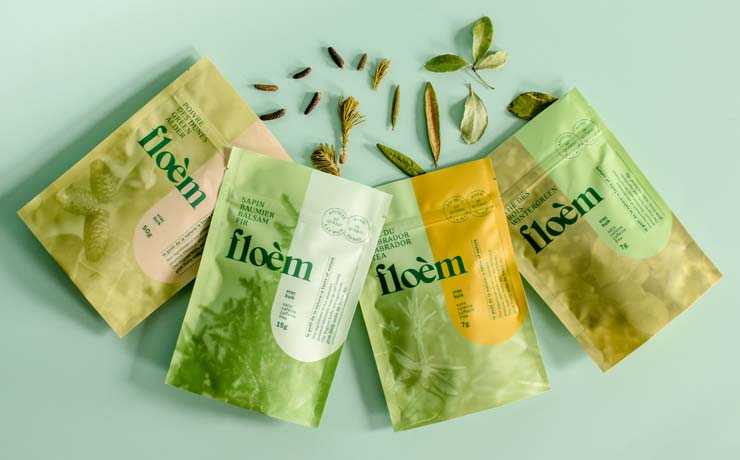
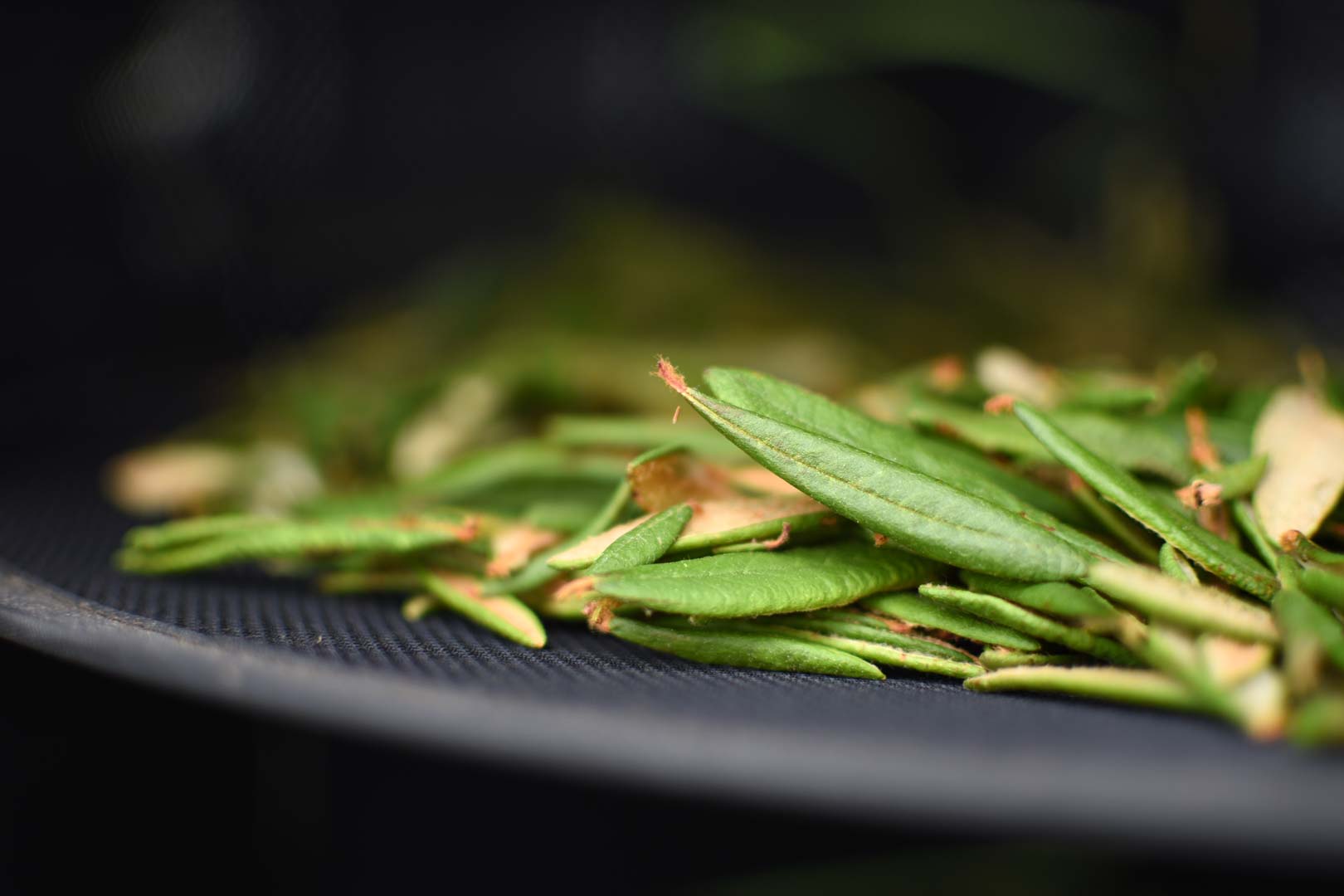
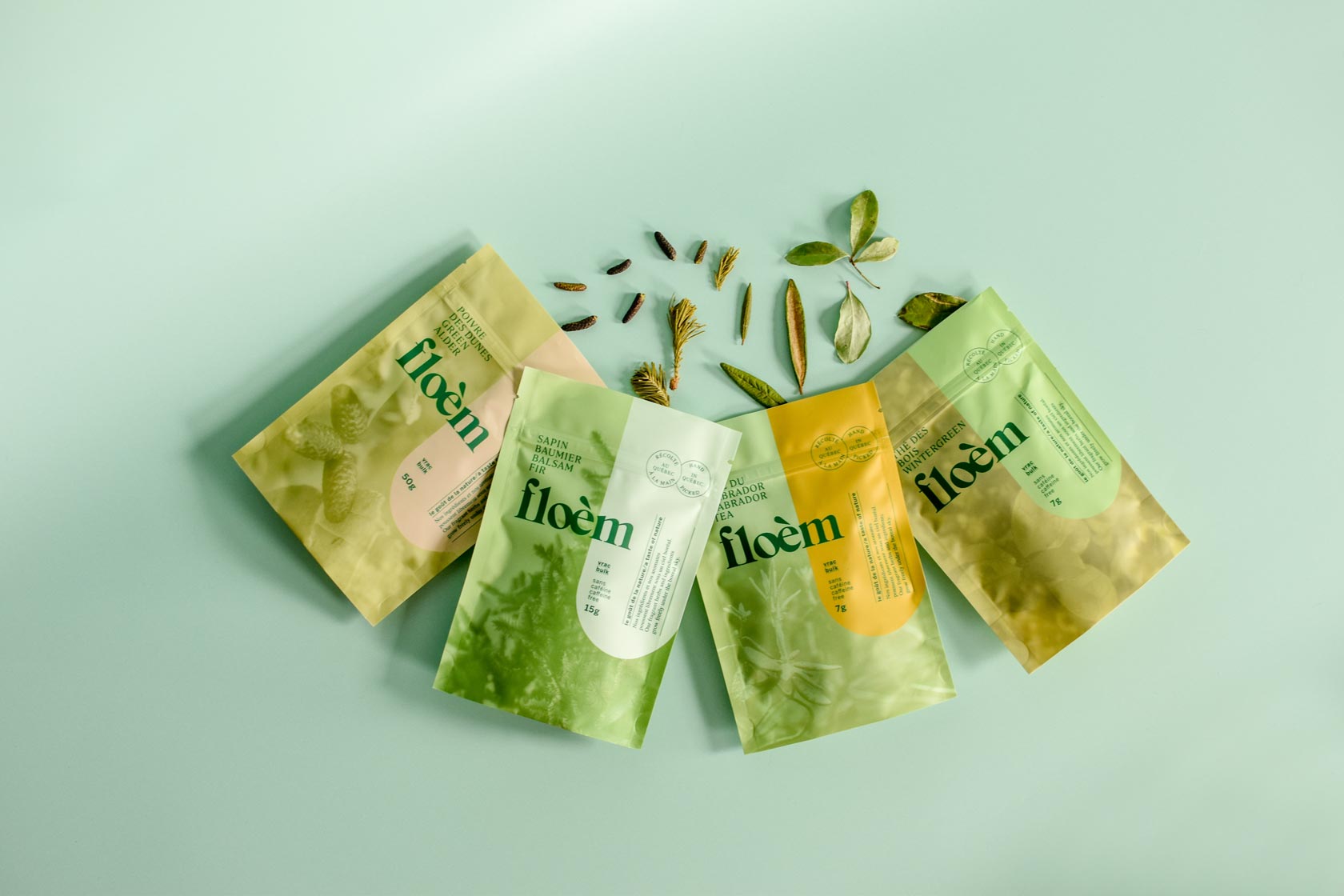
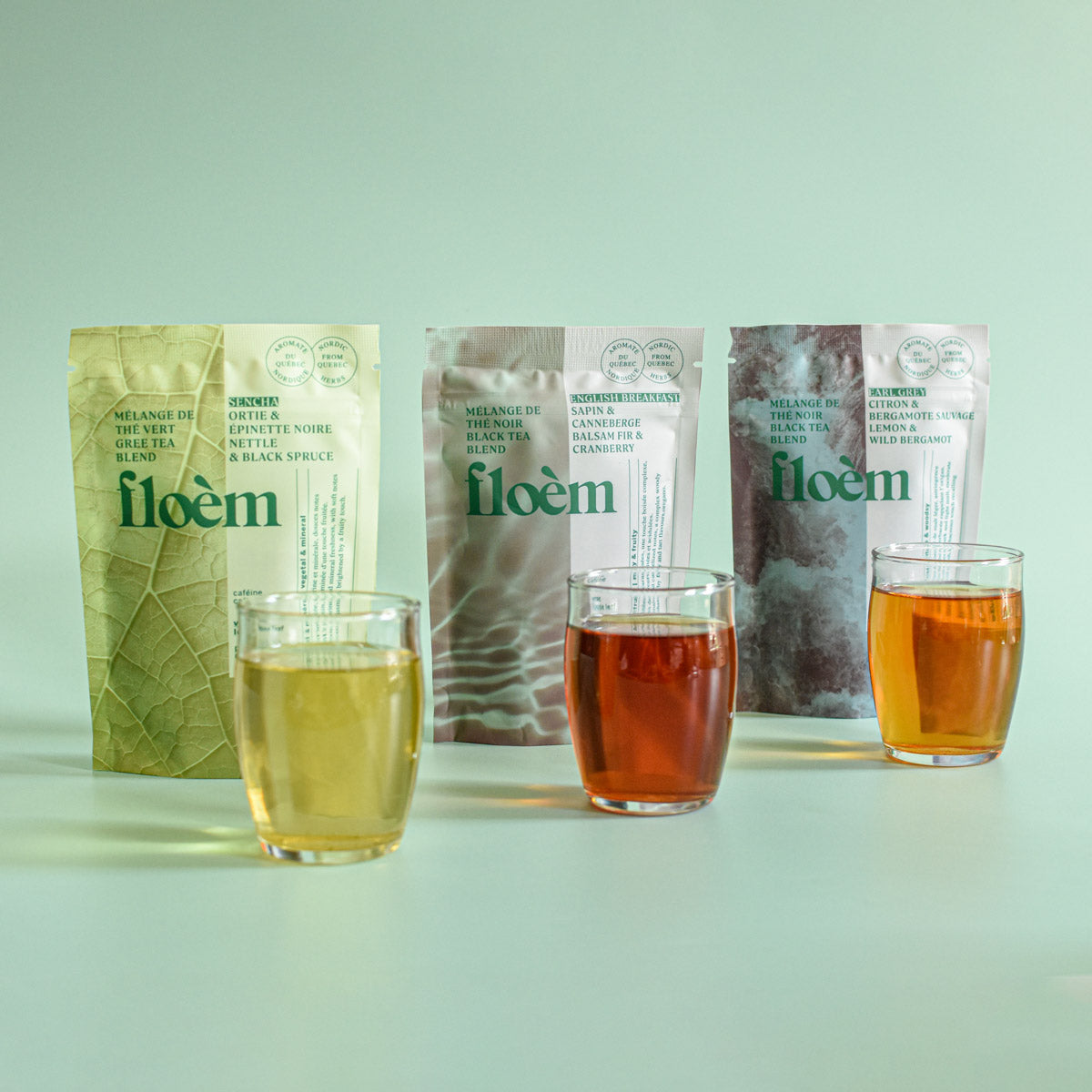
The Quebec boreal forest is a vast and complex ecosystem, brimming with resources far beyond the traditional timber used for construction or paper. At Floèm, a company specializing in discovering and showcasing ingredients from the boreal flora, we work daily at the heart of this environment. Our infusions, particularly our unique blends based on Labrador tea leaves, are the result of meticulous effort. Our harvesters hand-pick these raw materials to create products that responsibly and sustainably celebrate the richness of boreal flavors.
However, when discussing wild ingredients, aromatic plants, or forest mushrooms, a technical term frequently arises in the fields of ecology and land management: Non-Timber Forest Products (NTFPs). While this term is commonly used by experts, it often raises many questions for the general public.
In this comprehensive article, we will demystify forest and botanical vocabulary. We will explore the nature of these resources, learn to differentiate the various types of plants that make up our undergrowth, and understand why managing these riches has become a major ecological and economic issue. Whether you are a wild harvesting enthusiast, a tea lover curious to learn more about our ingredients, or simply a nature lover, this guide is designed to provide clear and documented answers.
Understanding the Basics: What are NTFPs?
To fully understand Floèm's mission and the nature of our ingredients, it is essential to define the basic terms. The forest ecosystem is a vast reservoir of biodiversity that offers a multitude of goods and services.
Definition and Key Concepts of Forest Resources
What is a non-timber product and what is the definition of non-timber forest products?
The most frequent question we receive is simple: What are NTFPs? More formally, what is the definition of non-timber forest products? According to the Food and Agriculture Organization of the United Nations (FAO), non-timber forest products are defined as goods of biological origin other than wood, derived from forests, other wooded lands, and trees outside forests. In other words, it is anything tangible that a forest can produce, excluding wood itself.
To be more precise, if you are wondering what is a non-timber product? or what is a non-timber product in everyday life, think of wild fruits, mushrooms, nuts, saps, and of course, the leaves and aromatic plants we use for our teas. These products are generally harvested without requiring the felling of trees or the destruction of the ecosystem. This definition encompasses a very real reality for many communities who depend on the forest for food, medicine, or to generate income sustainably.
What is the classification of NTFPs and what are non-wood plant products?
The diversity of resources is so vast that it is necessary to organize them. What is the classification of NTFPs? Experts generally divide these products into several broad categories to facilitate their management and commercialization. First, there are edible products, which include small fruits (blueberries, cranberries), wild mushrooms, nuts, and maple syrup. Second, there are medicinal and natural health products, very common in traditional pharmacopoeia. Third, there are floral and decorative products, such as fir branches used for Christmas wreaths. Finally, there are exudates like resins and gums.
When asking what are non-wood plant products?, we are specifically referring to the botanical part of this classification (excluding game or forest honey, which are animal-derived NTFPs). Herbs, mosses, ferns, and young resinous shoots are excellent examples of non-wood plant products that our harvesters seek to develop the complex aromatic profiles of our infusions.
International and Local Terminology
What are NTFPs and what are NTFP species?
Francophone terminology has direct international equivalents, which is crucial for trade and scientific research. If you read studies on the subject, you will inevitably encounter the terms NTFPs and NWFPs. What are NWFPs? NWFP stands for Non-Wood Forest Products. This is exactly the literal translation of the FAO's NTFPs. Similarly, if one asks what are NTFP species? (Non-Timber Forest Products), we are talking about the same resources, with "Timber" specifically referring to lumber.
These acronyms are used to regulate a rapidly expanding global market. Whether we are talking about Labrador tea in Quebec, wild ginseng in Asia, or gum arabic in Africa, all these resources fall under the banner of NTFP species. Grouping them under these terms allows researchers to assess the pressure on these resources on a global scale and establish equitable certification standards.
What products are available in the forest and what are forest products?
To summarize concretely, what are forest products? Traditionally, we almost exclusively thought of sawn timber and paper pulp. Today, the answer to the question what products are available in the forest? is much broader. In addition to wood, the forest provides us with food resources (game, fish, edible NTFPs), medicinal resources, basketry materials (bark, flexible roots), and even essential oils extracted from conifers.
At Floèm, we focus on a very specific selection of these products available in the forest. We target natural aromatics like sweetgale, dune pepper, and Labrador tea leaves, which require extensive knowledge of wetlands and boreal undergrowth to be identified and harvested at their full aromatic potential.
Botany 101: Differentiating Plant Types
To understand the origin of our ingredients, it is necessary to take a slight detour through botany. Plants that grow in the forest are not all structured in the same way, and this difference greatly influences how they are harvested.
The World of Woody Plants
What are woody plants and what is a woody plant?
The most fundamental distinction in forest botany separates plants based on the composition of their stem. So, what are woody and non-woody plants? Let's start with the first category. If you're asking what is a woody plant?, it refers to a plant that produces wood as its structural tissue. This wood is covered by bark, allowing the stem, branches, and trunk to survive harsh winters and continue their growth year after year.
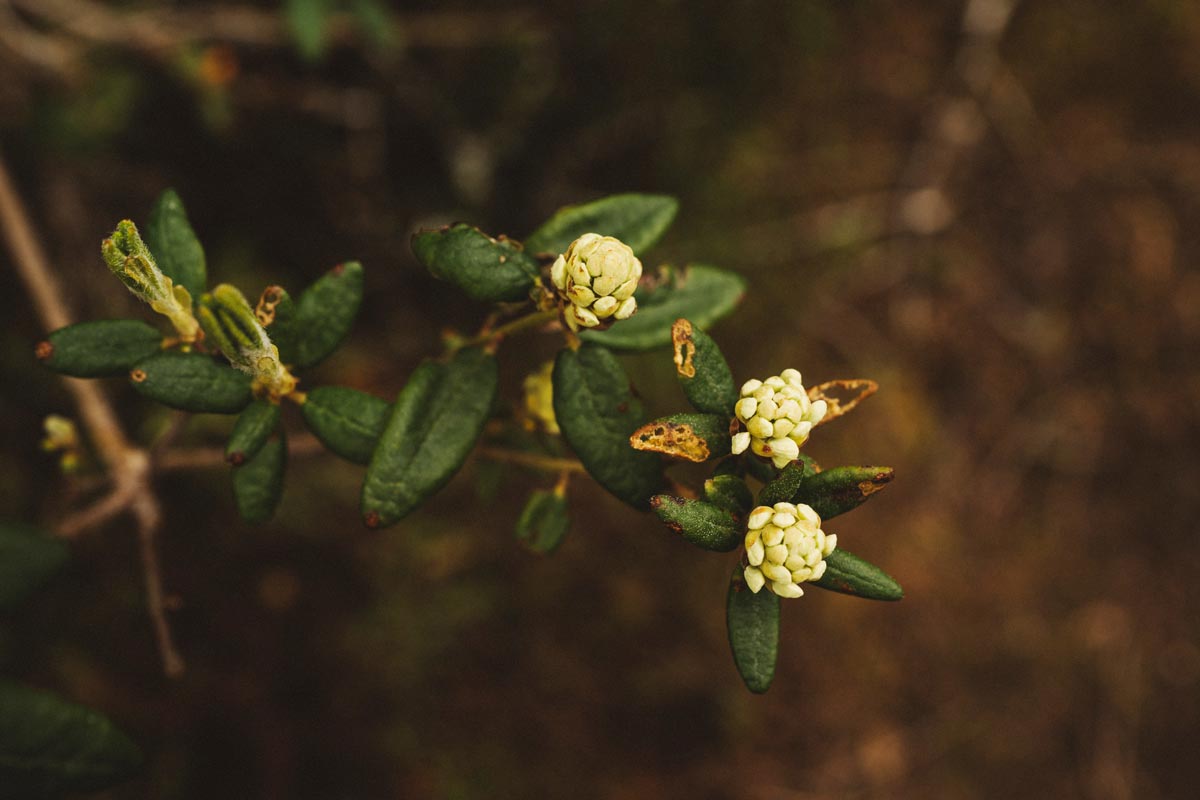
More specifically, what is woody? or what are woody plants? This is a generic term that encompasses all trees, shrubs, and subshrubs. These plants produce lignin, an organic polymer that hardens their cell walls. Labrador tea, for example, is a small shrub; it therefore perfectly fits into the category of woody plants, even if we only use its leaves (an NTFP) for our infusions.
What is a woody plant and can you name three examples of woody plants?
A term often used in nurseries or silviculture is "woody plant." What is a woody plant? It is simply a young specimen of a woody species (tree or shrub) that has been cultivated in a greenhouse or grows naturally, and which is already beginning to develop a rigid, woody stem, even if it is only a few centimeters tall.
To illustrate this concept very concretely: Can you name three examples of woody plants?
-
Sugar Maple: A large, woody deciduous tree, well-known for its hardwood and sap.
-
Balsam Fir: A woody conifer whose sturdy branches withstand the weight of snow.
-
Wild Blueberry: A small woody shrub, whose hard stems survive close to the ground under snow cover.
These three examples perfectly answer the question what are woody plants? by showing the diversity of size and form in this category.
The World of Herbaceous Plants
What are non-woody plants and what are non-woody plants called?
At the opposite end of the spectrum are the other members of the flora. What are non-woody plants? or what are non-woody plants? These are plants whose stems remain tender, green, and flexible, as they produce little or no wood.
If you are wondering what are non-woody plants called?, the exact botanical term is "herbaceous plants." These plants have a different survival strategy: in our northern climates, their aerial parts (stems and leaves) generally die back and disappear in the fall. The plant survives the winter thanks to its root system (bulbs, rhizomes) or seeds buried in the soil. To simply define what is a non-woody plant?, imagine any undergrowth or meadow plant that you can easily cut or crush between your fingers, unlike a woody twig.
Which of the following plants does not have a woody stem and what are examples of non-woody plants?
Let's do a practical exercise. If you are asked the following question during a forest walk: between a birch, a wild rose, a jack pine, and wild mint, which of the following plants does not have a woody stem? The answer is wild mint. Its square stems are purely herbaceous.
Other examples of non-woody plants or answers to the question what are examples of non-woody plants? include ferns (like ostrich fern, which yields fiddleheads), clover, chamomile, fireweed, or dandelion. The distinction between these two worlds is crucial: understanding what are woody and non-woody plants allows our harvesters to know exactly when to harvest, as the growth cycle of an herbaceous plant is generally much more ephemeral than the foliage of a woody shrub.
Traditional Industry vs. Wild Harvesting
Although Floèm focuses on leaves and aromatics, the dominant forestry activity in Canada remains timber harvesting. It is relevant to contrast these two sectors to better understand the uniqueness of Non-Timber Forest Products.
Wood products and classic forestry
What is the definition of a wood forest product and a wood product?
If NWFPs are everything that is not wood, then what is the definition of a wood forest product? A wood forest product is any raw material resulting from the felling of trees, intended for use for its structural, combustion, or fibrous properties. This includes lumber (boards, framing) and pulpwood (for paper pulp).
More generally, what is the definition of a wood product? This also includes all processed products derived from this resource, from furniture to particle board. These wood forest products form the basis of the classic silviculture industry, which involves heavy machinery, decades of planning, and significant modification of the forest landscape—methods very different from manual and selective harvesting.
What is the woody substance extracted from trees and what are woody trees?
At the heart of wood’s strength is chemistry. What is the woody substance extracted from trees? It is lignin, often accompanied by cellulose. Lignin is a complex organic compound that acts as the binder for plant cells, giving the trunk its rigidity and resistance to decay. It is this specific substance that the paper industry seeks to dissolve to retain only flexible cellulose during paper manufacturing.
In terms of species exploited for this resource, what are woody trees? or what are woody forest species? In Quebec, the industry relies primarily on conifers like black spruce, jack pine, and balsam fir for lumber, and on hardwoods like yellow birch or maple for cabinetry. Technically, as seen previously, all trees are "woody," but in the forest context, what are woody plants that are economically significant? These are the commercially important species on a large scale.
The overall richness of the ecosystem
What are the 3 forest resources and what are examples of non-wood forest products?
Modern land management now attempts to take a more holistic view. Managers ask themselves: what are the 3 forest resources? They are generally classified as follows:
-
Woody resources (timber and forest biomass).
-
Non-woody resources (our famous NWFPs).
-
Ecosystem resources and services (pure water, carbon sequestration, wildlife habitats, and recreational use of the forest).
To illustrate the second category, what are examples of non-wood forest products? Besides Labrador tea, we can mention birch sap (which yields a unique syrup), chaga (a medicinal mushroom growing on tree trunks), fiddleheads, wild sea buckthorn berries, or even fir gum (traditionally used as an antiseptic). All these elements are perfect answers to the question: what are non-wood forest products?
What are woody plants and what are woody forest species?
It is interesting to note that the same tree can provide both woody and non-woody products. For example, black spruce, which is the most common answer to what are the woody forest species? exploited in Quebec, is harvested for wood. However, in spring, its tender green shoots (which have not yet lignified) are harvested as NWFPs for their citrus and resin notes, which we love to use at Floèm.
Ecological importance and ecosystem management
The growing popularity of wild ingredients raises important questions about nature's capacity to meet this demand.
Socio-economic impact and sustainability
What is the importance of non-wood forest products?
From a human and economic perspective, what is the importance of non-wood forest products? Historically, these products ensured the survival and food security of Indigenous peoples and early settlers. Today, the importance of these resources translates into vital economic diversification for remote regions. Instead of relying solely on the economic cycles of the wood industry, local communities can generate recurring and sustainable income through the harvesting, processing, and sale of high-value products.
Furthermore, interest in these products strengthens the connection between the population and its territory. Understanding what is the importance of non-wood forest products?, is to realize that a standing, healthy, and biodiverse forest has immense value. This is exactly the philosophy we advocate at Floèm: valuing the raw ingredient and educating the public about its origin.
What is non-wood forest product management?
However, this resource is not inexhaustible. What is non-wood forest product management? It refers to all practices, rules, and knowledge applied to regulate the harvesting of these resources to ensure their sustainability. Unlike agricultural cultivation where soil and seeds are controlled, NWFP management takes place in a natural and wild environment.
Practically, what is non-wood forest product management? It involves establishing strict harvesting methods. At Floèm, our harvesters are trained never to collect more than a certain percentage of leaves from a Labrador tea shrub. We rotate harvesting areas to allow plants time to regenerate, and we avoid trampling sensitive areas (such as peatlands) during collection. This rigorous management is the key to the quality and sustainability of our infusions.
The challenges of forest management
What are woody weeds and their impact on the environment?
The forest is an environment of constant competition. Forest managers often ask themselves what are woody weeds? Although the term "weed" is subjective and anthropocentric, in forestry, it refers to fast-growing shrubs and young trees that invade an area (e.g., after logging or fire) and stifle desired species.
Speckled alder or certain willows are often considered woody weeds by wood producers, as they prevent the regeneration of young pines or spruces. For NWFP harvesters, managing this brush is sometimes necessary to maintain adequate sunlight for the growth of small forest fruits.
What are woody forage resources and woody grazing resources?
The exploitation of forest resources also concerns animal feed. What are woody forage resources? These are the twigs, leaves, buds, and bark of trees or shrubs consumed by animals. In the boreal forest, moose are the great specialists of this diet; they actively feed on birch or fir shoots in winter.
In a livestock farming or agroforestry context (where farm animals are integrated into the forest), we are interested in what are woody grazing resources? This involves allowing livestock to graze on certain shrubs to supplement their diet or to control the undergrowth. Good silvopastoral management ensures that livestock do not destroy valuable NWFP growing areas, once again highlighting the importance of integrated forest management.
Global diversity and botanical curiosities
To broaden our understanding, it is fascinating to look beyond our boreal forest and delve into some peculiarities of plant biology.
From the tropics to scientific classification
What are non-wood products from tropical forests?
The concept of NWFPs is universal. If Quebec has Labrador tea, what are non-wood products from tropical forests? Equatorial forests are tremendous providers of NWFPs. Natural latex (extracted from the rubber tree, Hevea brasiliensis), Brazil nuts (which grow only in the wild in the Amazon), açai berries, rattan for furniture, and wild cacao beans are striking examples.
The issues surrounding these distant resources are the same as ours: the fight against deforestation and the establishment of fair trade channels to support local populations while preserving the ecosystem.
What are the 4 types of plants?
To fully understand the vast diversity of NWFPs, it is necessary to refer to fundamental botany. What are the 4 types of plants? Science generally classifies terrestrial plants into four major evolutionary groups:
-
Bryophytes (mosses, widely used as NWFPs in floristry).
-
Pteridophytes (ferns and horsetails).
-
Gymnosperms (conifers, from which we extract resins and essential oils).
-
Angiosperms (flowering plants, which include the vast majority of our herbaceous and shrubby aromatics, including Labrador tea).
Exceptions in forest nature
What plant has no chlorophyll and what are non-chlorophyllous plants?
Nature always holds surprises. We systematically associate plants with the color green and photosynthesis, but what plant has no chlorophyll? In our North American undergrowth, we find ghost plant (Monotropa uniflora), also called Indian pipe. It is a waxy white plant that grows in dark forest areas.
But how does it feed, and what are non-chlorophyllous plants? These plants are called mycoheterotrophs. Instead of capturing sunlight, they connect to the underground fungal network (mycelium) to draw the nutrients they need, nutrients often produced by nearby large woody trees. Although it is not a commercial NWFP due to its rarity, it is a fascinating ecological curiosity that demonstrates how interconnected all elements of the forest are.
Conclusion: Valuing to better protect
In summary, the world of Non-Wood Forest Products (NWFPs) is a privileged gateway to understanding the complexity and generosity of the boreal forest. By making a clear distinction between woody resources (timber) and the multitude of woody and non-woody plants that make up the undergrowth, we realize that the ecosystem is an invaluable open-air pantry and pharmacy.
The importance of these resources, both economically and ecologically, demands rigorous and responsible management. At Floèm, we are proud to participate in this gentle and sustainable economy. Each hand-picked leaf reflects our commitment to this northern territory. We hope this informative article has answered your questions and enriched your perspective on nature. The next time you enjoy one of our boreal infusions, you won't just be drinking a comforting beverage; you'll be savoring the fruit of a living, respected, and deeply understood forest.






Hinterlasse einen Kommentar
Diese Website ist durch hCaptcha geschützt und es gelten die allgemeinen Geschäftsbedingungen und Datenschutzbestimmungen von hCaptcha.